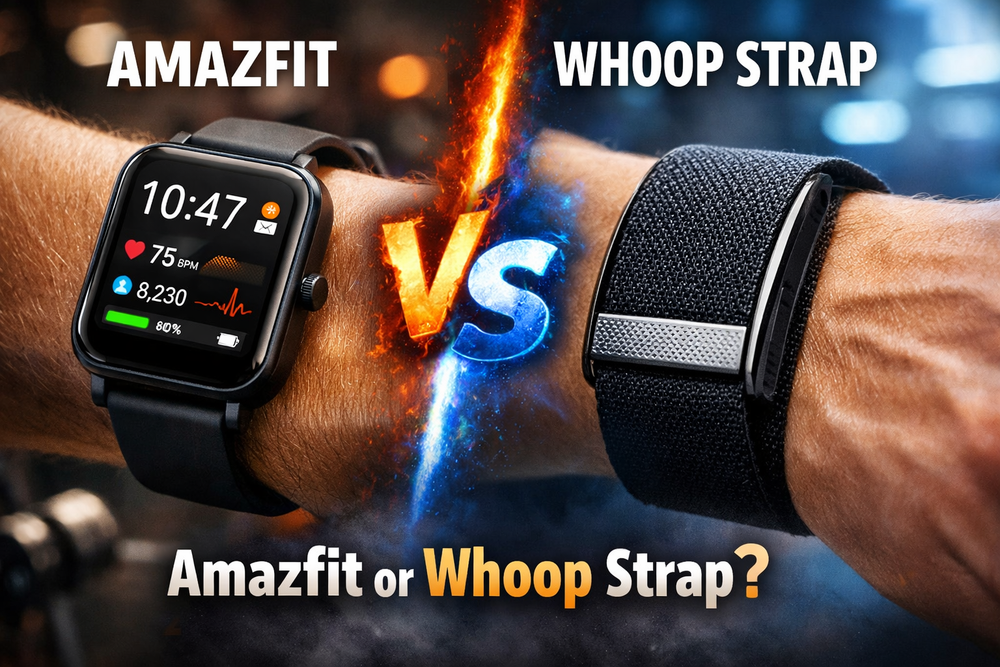
Amazfit or Whoop Strap
I honestly thought this would be a two-tab purchase: open a WHOOP page, open an Amazfit page, compare a few numbers, buy the “better” one, done. Instead I got stuck in that familiar place where both options are good, but the differences are the kind that show up only after week three—when the novelty is gone and the device either becomes part of your life or ends up in a drawer.
The shortlist was simple: WHOOP on one side, and Amazfit’s Helio world on the other—specifically the Helio Strap, because that’s the fair comparison. No screen, no notifications, just a wrist strap that tries to make sense of your day and your night.
And that’s when I noticed: this wasn’t about “which sensor is best.” It was about which philosophy I can live with.
What I Actually Wanted (and What I Didn’t)
I wasn’t looking for a smartwatch. I don’t need another screen buzzing during meetings, and I’m not trying to turn my wrist into a second phone. I wanted the boring part: 24/7 tracking, sleep, recovery, trends over time, and a way to connect the dots without obsessing over it.
But I also had a hard rule from day one: no subscription as the core requirement. I’ll pay for hardware. I’m not paying forever just to keep seeing my own metrics.
That rule didn’t immediately decide the winner—but it framed every feature comparison in a very different way.
The Only Fair Comparison: Strap vs. Strap
People love comparing WHOOP to smartwatches because it creates dramatic charts. But the real decision is simpler: WHOOP is a screenless strap, and the Amazfit equivalent is the Helio Strap. Everything else—rings, watches, “smart” features—is a different category. Useful, yes. Comparable, not really.
So I compared them like this: how good is the strap, and how good is the app behind it?
Hardware Features: What You Wear Every Day
Amazfit Helio Strap — what it brings
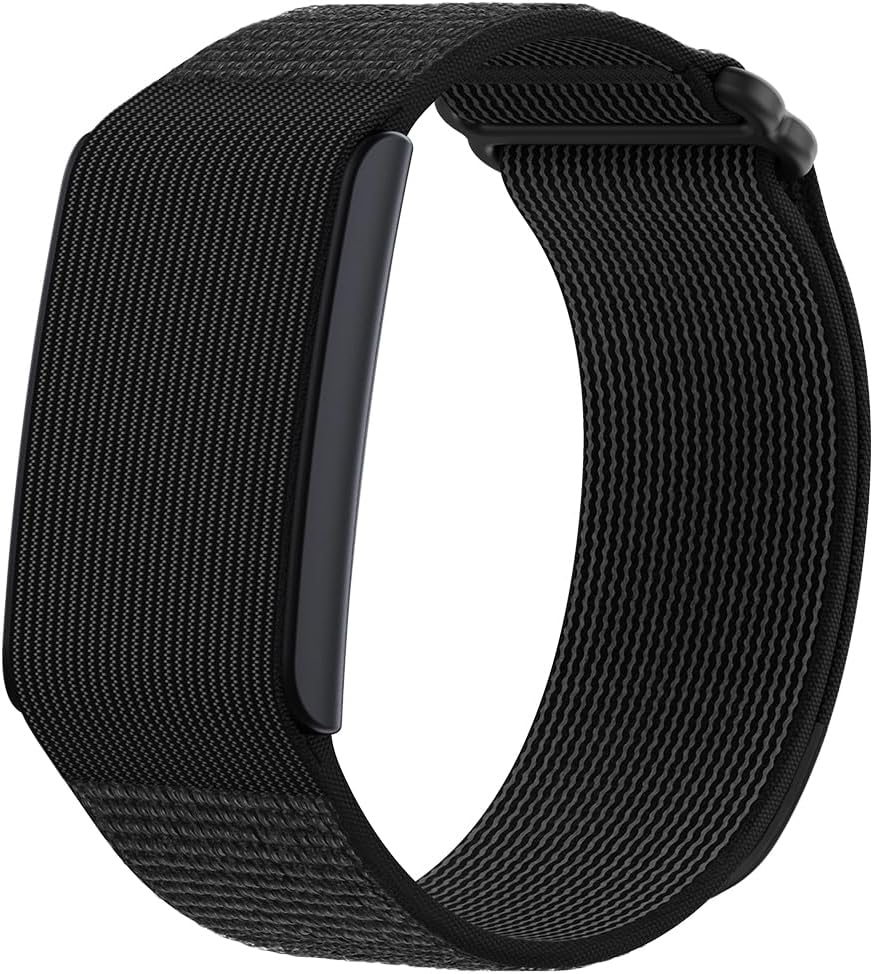
As you he Helio Strap is Amazfit’s “no screen, all signal” device. It’s lightweight, uses a nylon strap, and it’s designed to be worn constantly. The most practical feature is simply battery life: you can go about your routine without thinking about charging every other day. That matters more than people admit, because charging is where tracking breaks.
On the sensor side, Amazfit’s Helio Strap is built around their current-generation optical heart rate sensor (BioTracker 6.0 in their marketing), plus the usual motion sensors and temperature sensing. In normal life this translates to the obvious stuff—heart rate and sleep detection—but also to the “useful if you stick with it” stuff: recovery patterns, resting heart rate changes, stress signals, and trend tracking.
And the Helio Strap’s biggest advantage isn’t that it tries to be everything. It’s that it plugs into a bigger ecosystem. If you later want a watch for workouts and GPS, you can add one without changing your data platform.
WHOOP — what it brings
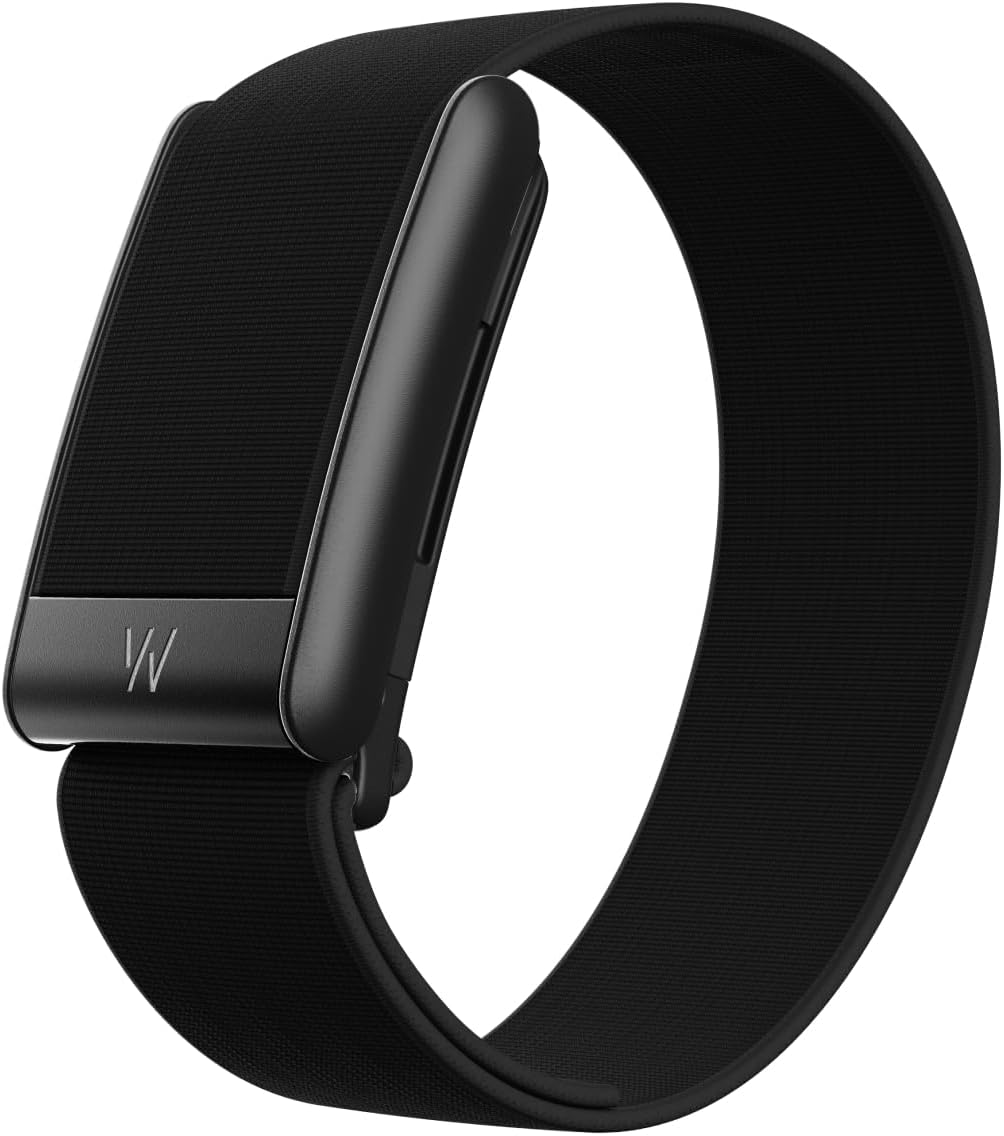
WHOOP hardware is basically a data module with a strap. It’s comfortable, minimal, and very clearly designed for the “always on” lifestyle. The big headline on newer generations is battery convenience—charging becomes less of a constant background task, which is exactly what you want for something that’s supposed to live on your wrist.
But hardware is not where WHOOP wins. WHOOP’s real hardware feature is simply that it’s tuned to support the membership model: always on, constant stream of data, consistent wear, and minimal friction. The device exists to keep the app fed.
App Features: Where the Real Product Lives
This is the section that actually decides the winner for most people. Two straps can track similar raw signals. But the app determines whether those signals turn into something you use—or something you ignore.
WHOOP App — the “coach loop”
WHOOP’s app is opinionated. It’s not just “here are your charts,” it’s “here’s what you should do today.” The core loop is simple and powerful: sleep drives recovery, recovery influences strain, strain pushes you toward better sleep. In practice, it means you wake up and immediately get a narrative: how ready your body is, how hard you can push, and how yesterday affected today.
WHOOP also leans heavily into structured interpretation. You get daily scores that feel like a coach’s verdict. If you’re the kind of person who thrives with external feedback and a system that nudges your behavior, WHOOP is addictive in a good way. It turns your body into a dashboard with a clear “recommended action.”
The downside is also obvious: if you hate being scored, you’ll hate WHOOP. And if you hate paying subscriptions, you’ll resent it—even if you like the app.
Zepp App (Amazfit) — the “toolbox”
Amazfit’s Zepp app feels like a platform rather than a doctrine. You get plenty of metrics—sleep, readiness-style indicators, stress, trends—without the same “you must follow the program” vibe. It’s more like: here’s what happened, here are the insights, decide what matters to you.
That’s both its strength and its weakness. If you want strict coaching, Zepp can feel less intense. But if you want ownership—hardware you buy once, data you can keep using without a bill—then the Zepp approach is easier to live with. It gives you information without turning your wearable into a subscription identity.
The other big point: Zepp isn’t just a Helio Strap app. It’s the hub for watches, rings, and straps. So if you’re someone who might add a watch later for workouts or GPS, you’re not starting over.
Feature-by-Feature: What Actually Matters in Daily Life
This is how I ended up comparing them, not as a spec-sheet war, but as “what will annoy me in real usage?”
Sleep tracking: both are built to do this well enough to be useful. The difference is presentation. WHOOP makes sleep part of its coaching story. Zepp presents sleep as a set of metrics you can interpret. If you want a daily verdict, WHOOP. If you want the data without the verdict, Amazfit.
Recovery/readiness: WHOOP is famous for this because it’s the centerpiece. It’s front and center, and it actively influences what the app recommends. Amazfit does recovery-style insights too, but it doesn’t shove them into your face with the same intensity. Again, coach vs toolbox.
Training load / strain: WHOOP’s strain concept is clean and sticky: it gives you an understandable score that ties directly into recovery. Amazfit can track workouts and load trends too—especially if you pair the Helio Strap with an Amazfit watch—but it’s more modular. WHOOP is one tightly bound model. Amazfit is a set of components you can combine.
Comfort and compliance: this is the silent killer feature. The best wearable is the one you actually keep wearing. WHOOP is designed for constant wear. Helio Strap aims for the same “forget it’s there” vibe. The real differentiator here ends up being your tolerance for charging and your tolerance for subscription pricing.
Ecosystem: WHOOP is intentionally narrow. That’s part of why it’s good. Amazfit is intentionally broad. That’s part of why it’s flexible. If you like mixing devices—strap now, watch later, maybe a ring for sleep—Amazfit makes that easy.
The Moment It Became Obvious
I tried to justify WHOOP like this: “If I use it daily, the subscription is worth it.” And that’s not a stupid argument. But I noticed what I was doing: I was trying to talk myself into a model I fundamentally don’t like.
I don’t want my body metrics behind a yearly paywall. I don’t want the best part of the product to disappear if I cancel. I want to buy hardware and keep using it. That’s it.
With Amazfit, I didn’t need a motivational speech. The model matched my rule: buy it once, use it, expand later if I want.
What I Bought (and Why)
I chose Amazfit Helio Strap.
Not because WHOOP is a bad product—it isn’t. But because WHOOP is a product you rent, and I didn’t want that. The Helio Strap gives me the strap-style tracking I wanted, inside an ecosystem where I can add a watch later without changing platforms, and without waking up to a subscription invoice in the background.
If you love being coached and you don’t mind paying for that coaching continuously, WHOOP will probably make you happy. If you want ownership and flexibility, the Amazfit route makes more sense.
Final Verdict (English)
I didn’t choose Amazfit because WHOOP is weak. I chose Amazfit because I don’t want a subscription wearable. WHOOP is a polished coaching system that you keep paying for. Amazfit is a set of tools you own, with a strap that finally makes a fair comparison possible. After the spec sheets fade into the background, that ownership difference is the thing you feel every single month—and that’s why it decided it for me.