Copilot After the Shake-Up: What Microsoft’s AI Strategy Shift Really Means for Customers
Every few months, the AI headlines flip.
One week it’s “OpenAI is changing everything”. The next week it’s “Microsoft restructures Copilot leadership”. Then there’s a new model, a new partnership, a new rumour about who is building what with whom.
If you sit on the customer side, trying to make sensible decisions about Microsoft 365, SAP, identity and governance, a lot of this looks like drama you don’t really have time for.
I think that’s fair. But I also think it’s worth taking a step back and asking:
What does this Copilot / AI strategy shake‑up actually change for you – if you’re the one who has to run this stuff in production?
In this post I’m not going to rehash corporate press releases. Instead, I’ll outline how I interpret the current Copilot/AI landscape from a customer and architect point of view, and what I would (and wouldn’t) change in my own plans because of it.
What seems to be happening at a high level
I’m simplifying aggressively here, but the pattern looks roughly like this:
- Microsoft is pushing Copilot across the stack: Windows, Microsoft 365, Azure, security, dev tools.
- OpenAI is not a hidden internal model provider anymore; it’s an independent actor with its own roadmap and cloud relationships.
- Microsoft is investing more into its own “frontier” models and infrastructure, not just wrapping OpenAI.
None of that means “Copilot is dead” or “OpenAI is gone from Microsoft”. It means the relationship is getting more complex and less exclusive.
As a customer, that has two immediate consequences for how I think about my stack:
- Don’t over‑optimise for a single model or provider.
- Pay more attention to the integration and governance layer than to the logo on the model.
What does not change for Copilot in Microsoft 365
Before we talk about strategy shifts, it’s worth grounding what Copilot in Microsoft 365 already is and likely will continue to be for a while.
For me, three things are stable:
- Copilot is the native assistant for your M365 tenant.
- Copilot talks to Microsoft Graph and respects your M365 permissions.
- Copilot’s value is dominated by the quality and structure of your tenant data, not by which exact model is behind the scenes this quarter.
If you’re using Copilot to:
- summarise documents, emails and Teams threads,
- prepare drafts and recaps,
- surface existing knowledge across SharePoint, OneDrive and Teams,
then most of your success (or failure) still comes from:
- how messy or clean your information architecture is,
- whether your permissions are sane,
- whether people actually store work in the right places.
A leadership reshuffle or a new frontier model does not suddenly fix (or break) any of that.
Where the strategy shift does matter
Where I do see impact for customers is in three areas:
- cost and performance trade‑offs,
- long‑term lock‑in vs. portability,
- how you design custom agents and extensions.
1. Cost and performance
As Microsoft invests in its own models and infrastructure, you can expect more knobs around:
- which experiences use which underlying model,
- how much context they pull in,
- how “fast vs. smart” they behave.
Some of that will be invisible to you (tuned by Microsoft). Some of it will show up as configuration or SKU choices.
From a customer architecture point of view, my reaction is:
- Design for variability: assume the exact underlying model might change or be tunable.
- Measure the value of Copilot scenarios in terms of time saved / quality improved, not which model answered.
If you find yourself writing architecture docs that are obsessed with “GPT‑X vs Model‑Y” but say nothing about how people actually use Copilot in Word/Teams/Outlook, you’re probably optimising the wrong layer.
2. Lock‑in vs. portability
The more Microsoft and OpenAI become independent “centres of gravity”, the more you have to answer a boring but important question:
Where do we accept platform lock‑in, and where do we want options?
In my own mental model:
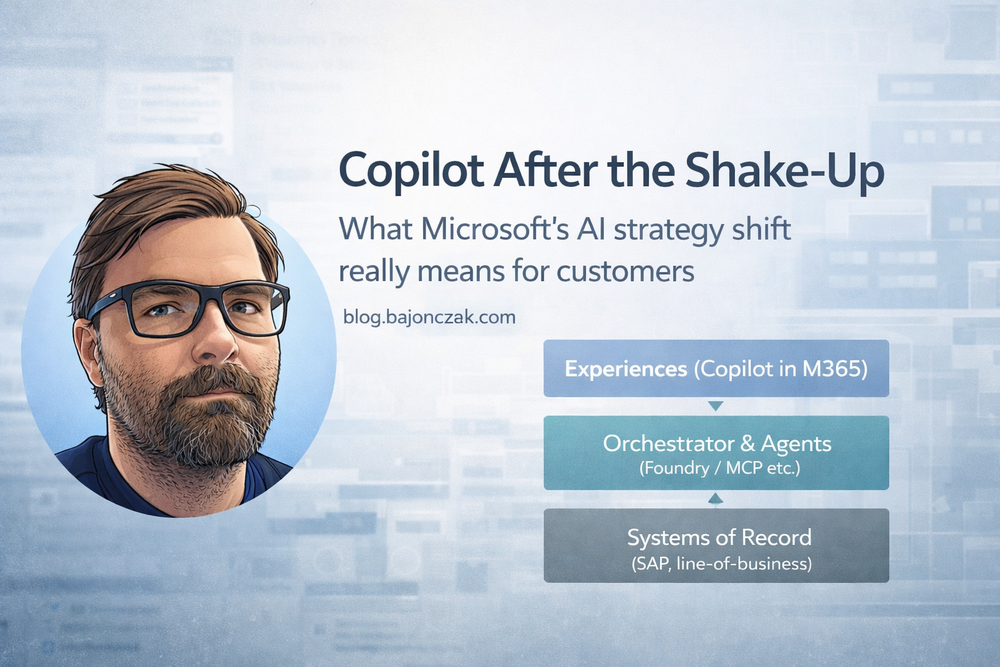
- I’m happy to accept lock‑in at the experience layer where it makes sense:
Copilot inside M365 is, by definition, a Microsoft experience. That’s fine – the value is that it’s close to my data and integrated with my tools. - I’m less happy with deep lock‑in at the integration and backend layer:
if I build custom agents, I’d rather they talk to a protocol or platform that can swap models underneath (MCP, Foundry, my own service), instead of hard‑coding a single vendor’s API everywhere.
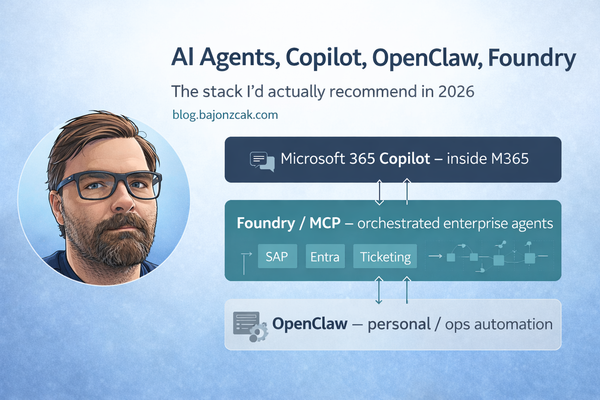
That’s why I like having a clear split in my stack:
- Use Copilot where the Microsoft 365 experience is the whole point.
- Use an orchestrator layer (Foundry/MCP, your own backend) for cross‑system agents, so you can change models without rewriting business logic.
3. Custom agents and extensions
One obvious direction of travel is deeper integration between Copilot and external tools: Graph connectors, plugins, MCP tools, Foundry agents, you name it.
As Microsoft’s AI strategy evolves, I’d expect:
- more ways to plug your own agents into Copilot (Studio, MCP, partner ecosystems),
- more guidance and guardrails from Microsoft around what “good” looks like,
- some churn in the exact APIs and patterns over the next 1–2 years.
From a customer perspective, I’d react with two principles:
- Design your agents and backends so they are useful even without Copilot integration (e.g. usable via Teams, web UIs, CLIs).
- Treat Copilot as one of several frontends, not the only one.
That way, if the Copilot side of the integration story changes, your core agents stay intact. You’re swapping one client, not rebuilding the whole thing.
What I would change in my plans (and what I wouldn’t)
If I were responsible for an organisation’s AI/Copilot roadmap today, here’s what I would and wouldn’t change based on the current shake‑up.
Things I would NOT change
- Investing in M365 hygiene.
Cleaning up SharePoint/Teams/OneDrive, fixing permissions, consolidating where necessary – all of that pays off with or without Copilot, regardless of which model runs under the hood. - Rolling out Copilot for classic knowledge work.
Drafting, summarising, recaps, “what do we know about X?” across existing M365 content – these remain high‑value, low‑regret scenarios. - Designing clear governance around data and extensions.
Scope, data sources, connectors, plugins, guardrails, operations – the governance questions don’t disappear because Microsoft reorganises a product group.
Things I WOULD adjust
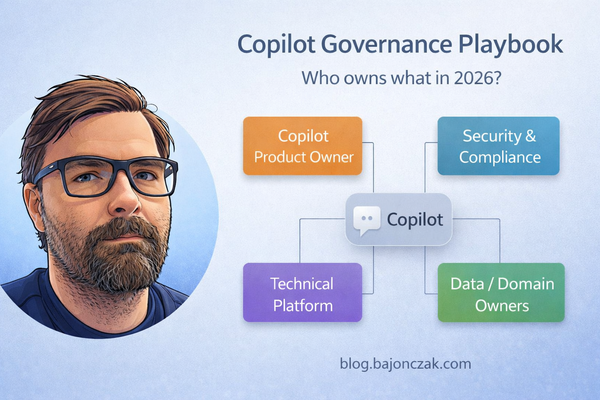
- Be explicit about where Copilot is the front door – and where it isn’t.
I’d write down (and communicate) something like:
“We use Copilot primarily for M365 content and light integrations. For deep SAP/ERP/line‑of‑business automation, we use dedicated agents and backends that may or may not surface via Copilot.” - Build on protocols and platforms, not single APIs.
For my own agents, I’d lean into MCP/Foundry or similar patterns, so I can plug in different models (including Microsoft’s own) without changing the agent surface. - Watch the cost/performance story, not every leadership headline.
I’d put effort into understanding which Copilot scenarios actually move the needle in my org and how licensing and usage costs scale – instead of chasing every rumour about which frontier model is being trained where.
How this plays with SAP and the rest of your estate
If you’re in a SAP‑heavy environment (which is where I spend a lot of my time), the temptation is high to see every Copilot announcement as the next opportunity to “just let AI read SAP”.
I’d resist that urge, no matter how shiny the models are.
The strategy shift doesn’t change the fundamental truth:
- SAP remains a system of record with its own security, compliance and performance constraints.
- Copilot is excellent at working with M365 content around SAP (reports, decks, decisions).
- Deep SAP integration still needs careful design, often via dedicated agents and APIs, not “Copilot will somehow read SAP”.
What might change is how you plug those agents into Copilot – via Copilot Studio, MCP tools, Foundry, partner solutions. But the idea that you should have a clear separation between:
- “Copilot as assistant inside M365”, and
- “agents/backends that speak to SAP and other systems with clear guardrails”
is not going away. If anything, it’s becoming more important.
My take
AI leadership reshuffles and strategy blog posts make for interesting reading, but they don’t run your tenant.
From where I sit, the sane way to react to the current Copilot/AI shake‑up is to double down on the boring, durable bits:
- clean M365 foundations (content, permissions, architecture),
- clear governance around what Copilot is for in your org,
- a deliberate split between experience layer (Copilot) and orchestrator layer (your agents/backends),
- and a healthy scepticism towards “this one model/provider will solve everything”.
Vendors will keep changing org charts and press releases. Models will keep evolving. What doesn’t change is the fact that you have to live with the decisions you make about data, identity and automation today.
If your Copilot plans still make sense when you mentally swap “today’s model” for “some other capable model”, you’re probably on the right track.